Ophelia: Shakespeare's Most Misunderstood Character
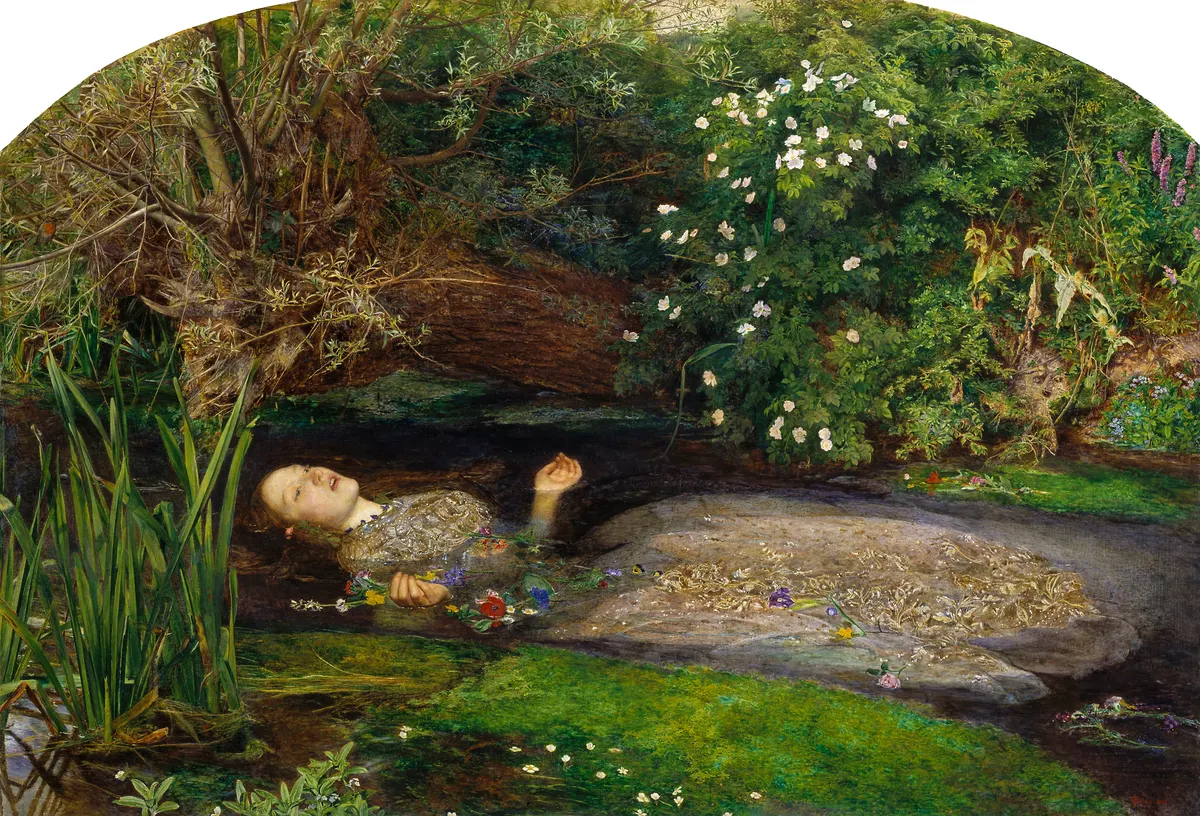
Most people, when they picture Ophelia, picture John Everett Millais's 1851–52 painting: a young woman floating in a stream, robes spread wide, flowers drifting around her. Serene. Decorative. Already gone. That image has shaped how audiences read the character for 170 years. It gets her wrong.
The Woman in Act One
Ophelia first appears in Act 1, Scene 3. Her brother Laertes warns her off Hamlet before leaving for France, then her father Polonius orders her to cut off all contact: no more meetings, no more letters. She agrees. "I shall obey, my lord."
But look at what she says to Laertes just before this. She warns him not to preach chastity while living by different rules himself. That's wit. That's someone who sees the double standard clearly and chooses, for now, to hold her tongue.
Her compliance is survival, not stupidity. She lives in a court where Polonius spies on his own son, where Claudius has murdered the king, where no one says what they mean. Staying quiet is rational.
What Hamlet Does
Act 3, Scene 1 contains the "get thee to a nunnery" speech, which lands very differently once you know that "nunnery" in Elizabethan slang meant a brothel as well as a convent. Hamlet is simultaneously telling her to disappear and accusing her of sexual corruption, in one breath, while Polonius and Claudius watch from behind a curtain.
She has been set up as bait by her own father. Hamlet knows it and takes his anger out on her anyway. Her response, "O, what a noble mind is here o'erthrown!", is one of the most precise descriptions of grief and disillusionment in the play.
The Flower Speech
Act 4, Scene 5 is Ophelia in the grip of madness, distributing flowers to the court. Most productions play it as pure distress. But Elizabethan flower symbolism was a recognisable cultural code, and what she gives out is pointed.
The text never names the recipients, but stage tradition is consistent: rosemary (remembrance) and pansies (thoughts) to Laertes, fennel (flattery) and columbines (adultery) to the King, rue (repentance) to the Queen. She notes that the violets, which symbolise faithfulness, "withered all when my father died."
This is not random grief. She's telling each person in the court exactly what she thinks of them. Her madness gives her cover to say what she could never say while sane. Whether Shakespeare intended her to be conscious of the symbolism or whether her subconscious is doing the work, the flower speech is the most direct she ever gets.
Her Death and the Painting Problem
Ophelia's death isn't shown onstage. Gertrude describes it in Act 4, Scene 7: she fell into a brook while hanging flowers on a willow tree, and her waterlogged clothes dragged her down. She sang as she drowned. The episode exists only in that speech. Audiences never see it.
Millais's painting, exhibited at the Royal Academy in 1852, showed this scene with Elizabeth Siddal as the model, posing in a bathtub over many weeks. The painting fixed Ophelia as beautiful, floating, passive in the cultural imagination. Drowning as aesthetic experience.
Elaine Showalter's 1985 essay "Representing Ophelia: Women, Madness, and the Responsibilities of Feminist Criticism" traced how each generation remakes Ophelia to fit its own anxieties about women and mental illness. The Victorian version (pure, suffering, helpless) became so dominant that it still shapes how actors approach the role today.
The play's Ophelia is sharper and sadder than that. She's the only person in Hamlet's Denmark who distributes accurate assessments of everyone around her, not through argument or confrontation but through flowers, once she has nothing left to lose.
Read more on the Hamlet characters page: Ophelia.
Sources and Further Reading
Read the Plays
Test Your Knowledge
Think you know your Shakespeare? Put it to the test with one of our free quizzes.
See all quizzes →