Shakespeare Globe Theatre Flags – Elizabethan Advertising & Tudor Marketing
No phones, no televisions, no social media. Yet the Globe Theatre had a simple way to advertise its shows without printing a single word. A flag flying high above the thatched roof could be seen for miles across the Thames, telling anyone who looked that a play would begin that afternoon. Here is how Shakespeare's playhouse and its rivals turned coloured banners into the first theatrical billboards.
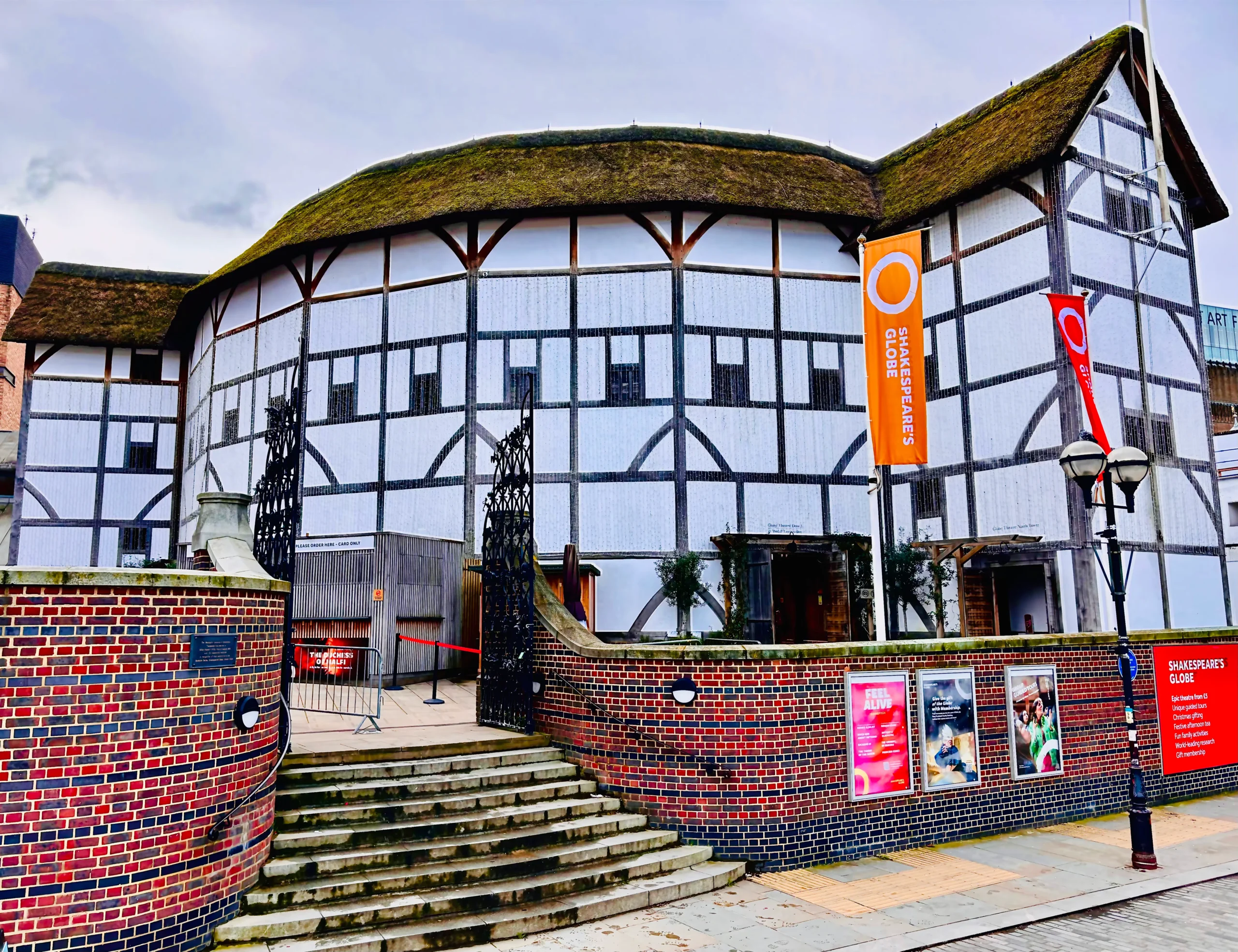
Globe Theatre Flag System Explained: How Shakespeare Advertised His Plays
Because the major playhouses stood outside London's city walls, owners couldn't rely on town criers or city posters alone to advertise their shows. Instead, the Globe hoisted a flag on performance days, transforming the theatre itself into a giant signal visible from across the river. A 1612 writer marvelled that "each play house advanceth his flagge in the aire, whither quickly at the waving thereof, are summoned whole troopes of men, women and children."
Literacy rates were low. Perhaps only a third of men and even fewer women could read well by 1600. A visual cue was essential. Even those who could not decipher a printed playbill knew that a fluttering banner meant, "There's a play today!" Moreover, the Globe's own flag reportedly pictured Hercules bearing a globe beneath the motto Totus mundus agit histrionem, meaning "All the world's a playhouse."
Globe Theatre Flag Colours Meaning: White, Black, Red Genre Codes
Tradition holds that the Globe refined its system further with colour-coded flags that advertised a play's genre at a glance: white (comedy), black (tragedy) and red (history). No surviving Elizabethan document spells the colour code out, but the story is repeated in countless theatre histories, and a coded palette would have let playgoers choose their afternoon's entertainment simply by scanning the skyline.
White Flag — Comedy
White, the colour of purity and happy endings, told crowds to expect laughter, romance and a joyful finale.
Black Flag — Tragedy
Black, the hue of mourning, foreshadowed death, sorrow and weighty themes — think Hamlet or Macbeth.
Red Flag — History
Red, associated with blood and battle, signalled a history play filled with kings, crowns and sword-clashing patriotism.
Explore Shakespeare's Plays by Genre
Now you know how flags signalled comedies, tragedies and histories — dive into the plays themselves!
🎭 Browse All PlaysHow Globe Theatre Flags Attracted Audiences in Tudor London
The banner system was cheap, immediate and impossible to regulate from inside the city. Authorities who frowned on playhouse advertising could do little about cloth fluttering on private property across the water. Raised at midday, the flag reached anyone strolling London Bridge; trumpets then blared moments before curtain time to create urgency.
Competition was fierce: nearby animal-baiting pits, gambling dens and rival theatres all vied for pennies. A bold red, white or black emblem helped the Globe win that battle for attention. Once inside, patrons enjoyed sword fights, drums and pageantry designed to outshine the bloody spectacles of the bear garden.
Modern Use of Shakespeare Globe Flags Today
The reconstructed Shakespeare's Globe on London's South Bank raises a flag for every performance, linking twenty-first-century audiences to a 400-year-old marketing trick. Across the Atlantic, the Oregon Shakespeare Festival begins each show with a ceremonial flag-raising at trumpet call. Though modern theatres rely on marquees and social media, every illuminated poster owes something to the Globe's pioneering billboard in cloth.
What the Flag System Teaches Us
The Globe's system was simple, cheap, and visible from across the river. Be seen, be clear, and make people curious. A coloured flag in 1600 did the same work an Instagram post does today: it caught attention and told people what to expect.
Sources and Further Reading
Read the Plays
Test Your Knowledge
Think you know your Shakespeare? Put it to the test with one of our free quizzes.
See all quizzes →